

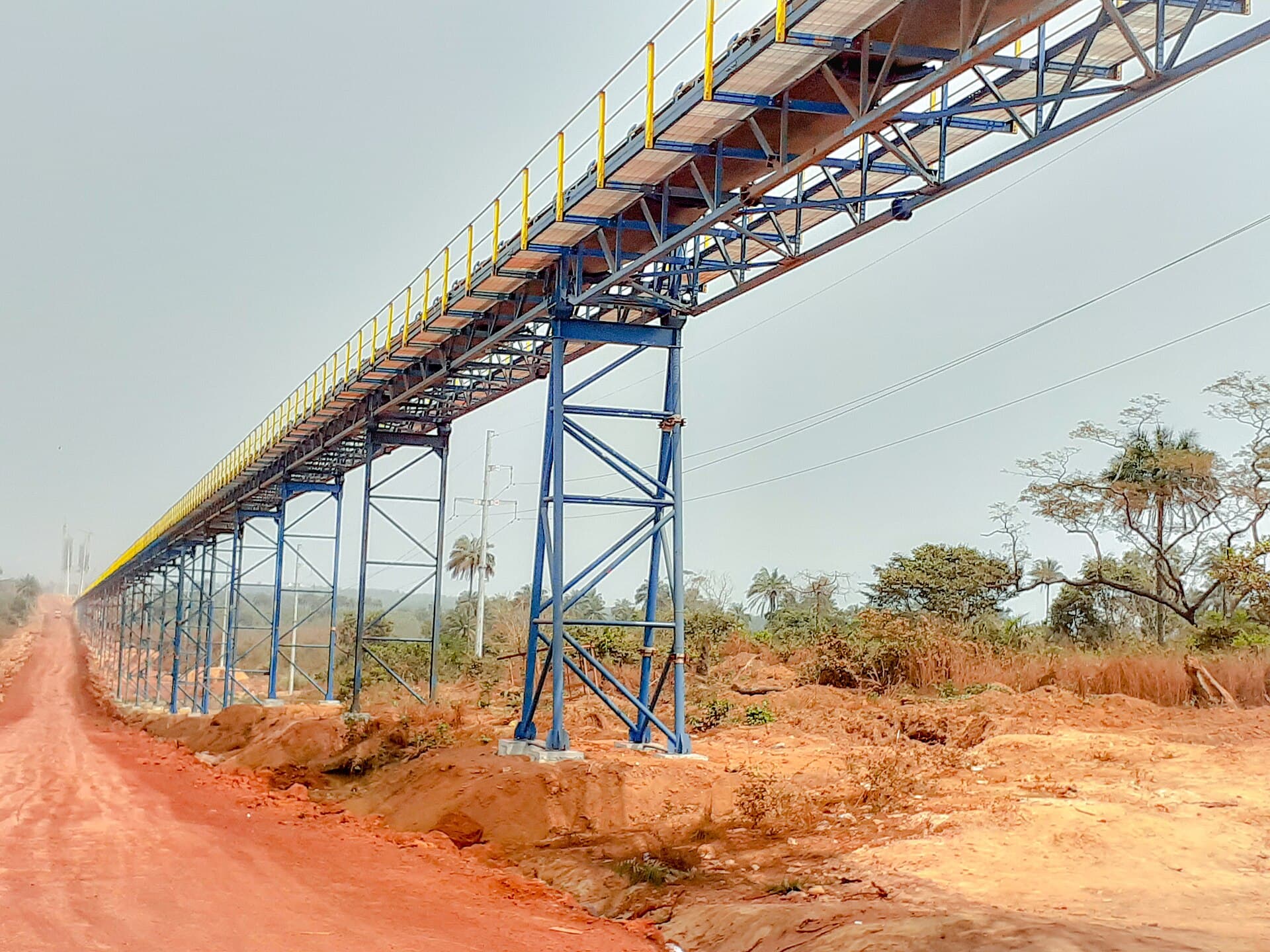
Mining Logistics
Organising the transport of ore, from the extraction site to the loading point.
D Logistics & Port Services organises bulk mineral transport in Guinea: mining logistics, river and coastal transport, barge chartering and port services, for the supply chains of the mining and extractive industries. One chain, from the mine to the ship.
Thirty-five barges and five cranes available for a shipment. We charter the vessel that suits the volume and the schedule, not the one that needs filling: an unavailable operator is replaced, it does not push back the campaign. The equipment belongs to the network’s operators, and the distinction matters to whoever finances, insures or audits a cargo.
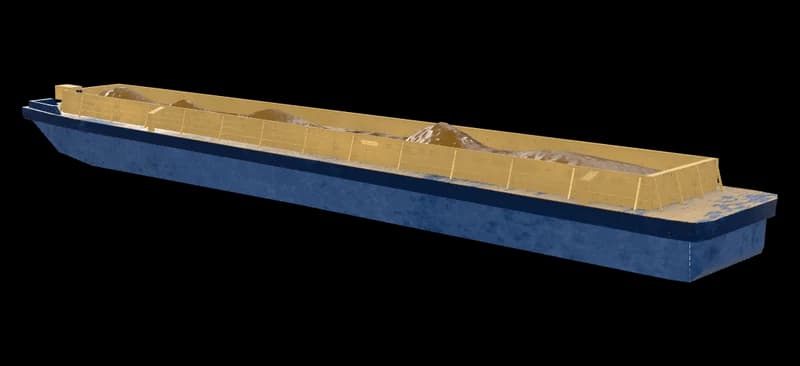
These figures are the network’s capacity, with every barge mobilised at once. What a campaign actually carries depends on draught, the rainy season and the port’s loading windows: that is the calculation we run before committing to a deadline.
Together they cover the whole journey. Separately, each can be contracted on its own: take the full chain, or just the link you are missing.
Organising the transport of ore, from the extraction site to the loading point.
Mobilising river and coastal capacity from the partner network, to match volume and schedule.
Coordinating quayside operations: formalities, berthing windows, loading sequence.
Loading, discharging and transferring bulk, with the network’s cranes.
The thread that ties mine, terminal, port and vessel together — and that warns when one link runs late.
Four points, and as many places where a cargo can stop. Holding them together is the work.
The ore leaves the extraction site. This is where the pace of everything downstream is set.
Haulage to the river loading point, and holding when the window is not open.
Berthing, formalities, slots. It is the one point on the route nobody commands alone.
Loading on board. Where responsibility passes, according to the Incoterm agreed in the contract.
Our role
To connect mining producers, logistics operators, terminals, ports and international buyers, so as to secure a supply chain that is reliable, competitive and optimised.
Tell us where the cargo starts, where it must arrive and by when. We come back with a transport plan and a price.